Pipelining and Caches
Tom Kelliher, CS 240
Apr. 23, 1999
Pipelining.
- Pipelining.
- Caches.
More caches.
- Control hazards. Consider the following example:
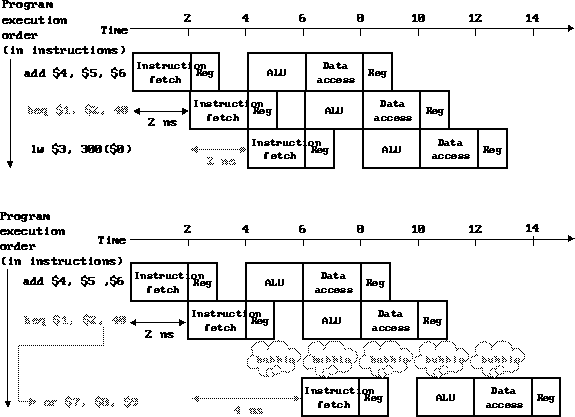
Solutions:
- Stall.
- Predict.
Static prediction. Truly static. Compile-time determined.
Dynamic prediction. Branch history tables. One-, two-bit counters.
- Delayed branch.
Assumes you know branch outcome early.
Code scheduling:
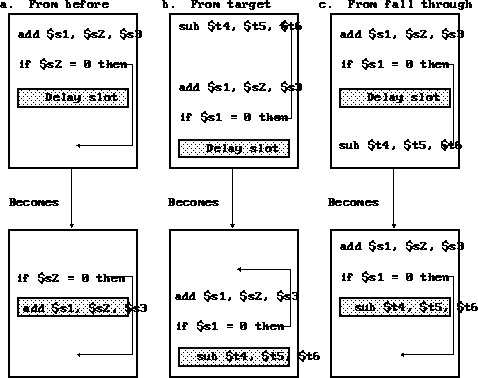
Consideration: deeper pipelines.
- Data hazards.
Data not available when needed.
ALU example:
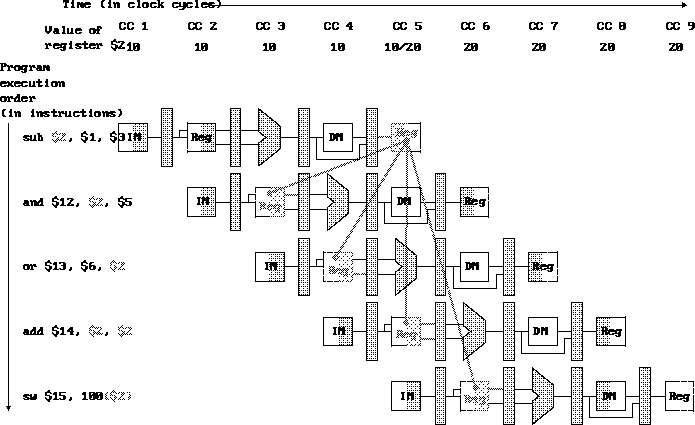
Fixed by forwarding.
Memory example:
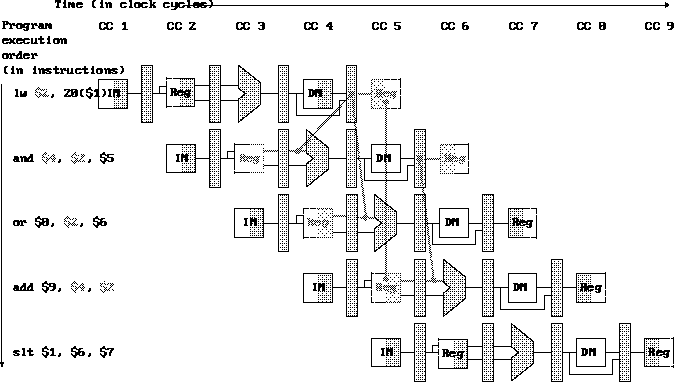
How can this be fixed? Data prediction.
Dynamic scheduling:
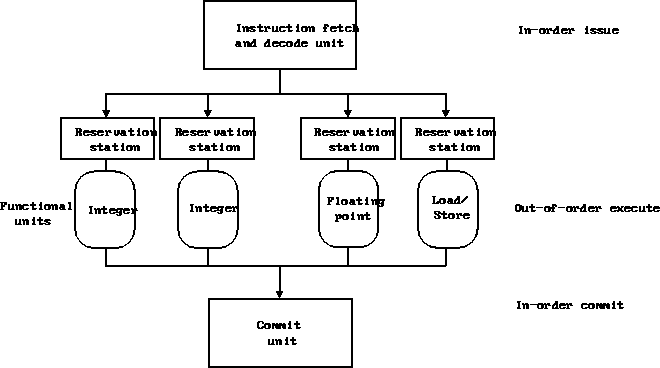
Logical vs. physical registers.
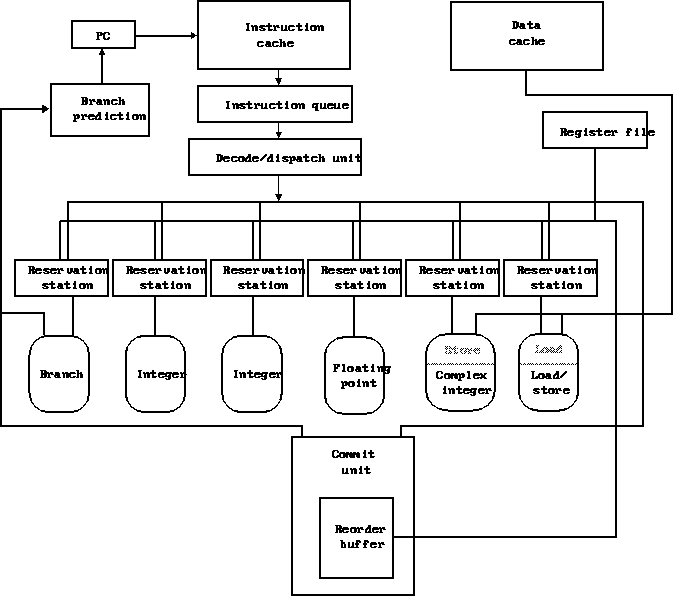
Generic structure of Pentium Pro, PowerPC 604:
The memory hierarchy:
- Registers.
- Main memory.
- Disk.
- Tape and other off-line storage.
Properties: speed, size, cost:

- The idea behind caches: provide the size of the underlying level of
the hierarchy while hiding its latency.
- Why do we have caches?
- Where do we see them?
- Why do they work? Locality.
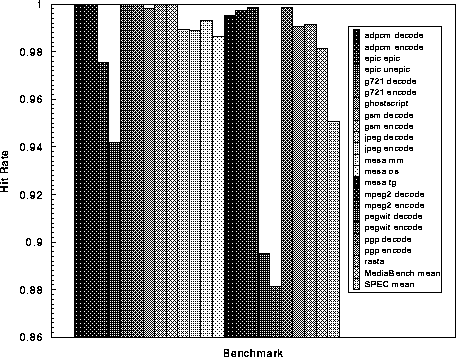
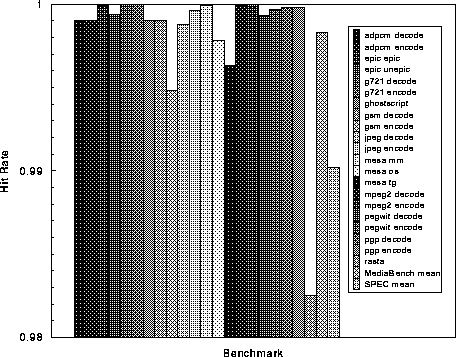
- The measure of cache effectiveness: hit rate.
Data cache hit rates for MediaBench:
Instruction cache hit rates for MediaBench:
Measuring effective access time.
Thomas P. Kelliher
Fri Apr 23 07:49:00 EDT 1999
Tom Kelliher