Chapter 11
Quality of Service
Outline
I.
Introduction
–
Time is
precious
•
Lengthy
or unexpected system response time can produce:
–
Frustration
–
Annoyance
–
Eventual
anger
•
Speedy
and quickly done work can result in users:
–
learning
less
–
reading
with lower comprehension
–
making
more ill-considered decisions
–
committing
more data-entry errors
II. Models of response-time impacts
•
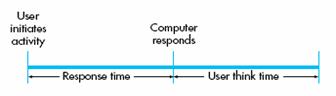
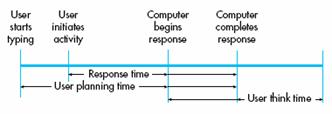
Response
time
–
The
number of seconds it takes from the moment users initiate an activity until the
computer presents results on the display
•
User
think time
–
The
number of seconds the user thinks before entering the next action
•
Designers
of response times and display rates in HCI must consider:
–
complex
interaction of technical feasibility
–
cost
–
task
complexity
–
user
expectations
–
speed of
task performance
–
error
rates
–
error
handling procedures
•
Overall
majority of users prefer rapid interactions
–
Lengthy
response times (15 seconds) are detrimental to productivity
–
Rapid
response times (1 second or less) are preferable, but can increase errors for
complex tasks
•
Display
Rate
•
Reading
textual information from a screen is a challenging cognitive and perceptual
task
•
Cognitive
human performance would be useful for:
–
making
predictions
–
designing
systems
– formulating management policies
Limitations of
short-term and working memory
•
Any
cognitive model must emerge from an understanding of human problem-solving
abilities
•
Magic
number seven - plus or minus two
•
Short
term and working memory are highly volatile
–
Disruptions
cause loss of memory
– Delays require that memory be refreshed
Source of errors
•
Long
(1976) found unskilled and skilled typists worked more slowly and made more
errors with longer response times
–
For a
given user and task, there is a preferred response time
Conditions for
optimum problem solving
•
Longer
response time causes uneasiness in the user because the penalty for error
increases
•
Shorter
response time may cause the user to fail to comprehend the presented materials
•
Progress
indicators shorten perceived elapsed time and heighten satisfaction
•
Rapid
task performance, low error rates, and high satisfaction can come from:
–
Users
have adequate knowledge of the objects and actions necessary for the problem-solving
task
–
The
solution plan can be carried out without delays
–
Distractions
are eliminated
–
User
anxiety is low
–
There is
feedback about progress toward solution
–
Errors
can be avoided or handled easily
•
Other
conjectures in choosing the optimum interaction speed
–
Novices
may exhibit better performance with slower response time
–
Novices
prefer to work at slower speeds
–
With
little penalty for an error, users prefer to work more quickly
–
When the
task is familiar and easily comprehended, users prefer more rapid action
–
If users
have experienced rapid performance previously, they will expect in future
situations
III. Expectations and attitudes
•
Related
design issues may clarify the question of acceptable response time
–
E.g. how
long before hearing a dial-tone
•
Two-second
limit (Miller, 1968) appropriate for many tasks
Response-time choke
Response time
across web sites varies
Three things
influence response-time:
•
Previous
experiences
•
The
individual's tolerance for delays
•
Task
complexity
IV. User productivity
•
Repetitive
tasks
•
Problem
solving tasks
V. Variability
•
People
are willing to pay substantial amounts of money to reduce the variability in
their life e.g. insurance
•
Modest
variations in response time (plus or minus 50% of the mean) appear to be tolerable
• It may be useful to slow down unexpected fast responses